2019 & 2020 post & pre mortems

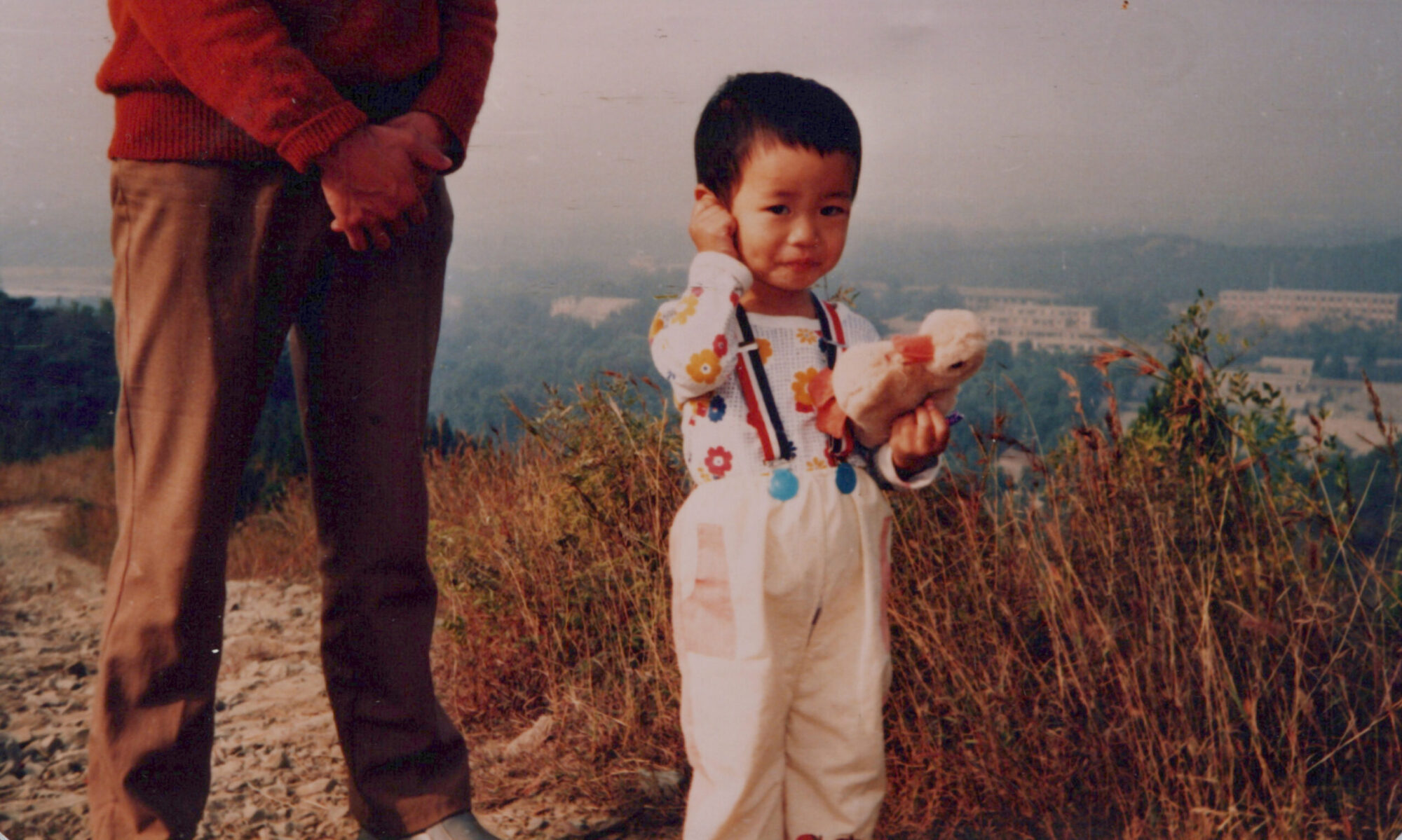
Nancy Hua likes to work out and wear weird outfits!
Nancy Hua likes to work out, go to Barry’s Bootcamp, and wear weird outfits!

For the past 6 years, I was scared to openly share my writing because I feared it might somehow “matter,” ie. negatively affect my company or be misconstrued. But in 2019, my company got acquired! Now, I’m a cat of leisure so I can post whatever, starting with these notes on my 2019 and 2020 goals.

I had 3 big goals in 2019: 

  1. exit Apptimize (done)
  2. finish writing my YA sci-fi novel (not done)
  3. go on a date with 1 person monthly with P score of 70%+ (done, although currently single)

Let’s drill in on each goal!

Apptimize learnings: 
I ran Apptimize for 6 years, constantly hero-ing before I became aware that there was another way to operate. After all, who else could possibly be held responsible for anything? Not only was I the founder and CEO, I’d always been the one responsible for everything I wanted my whole life, never viewing my teachers or parents as authority figures, always questioning directives. It wasn’t until the final version of my executive team that I was able to recognize I was working with people who were smarter than me about everything. Then I felt I could stop hero-ing and risk learning what happens when I stop (big thanks to my CEO group).

I wrote a post mortem of my experiences running Apptimize when we hired a new CEO in 2018. I was still technically at the company while he was selling it, but I was figureheading and not part of the acquisition. LMK if you want to see the post mortem bc publicly sharing my failures scares me. That was one of my learnings— I can talk myself into a lot of stuff that I don’t actually want for the sake of wanting to view myself as “successful,” but I don’t want to operate like that anymore. 

My new rule of thumb is to only do stuff that I’d do even if I knew it was likely to fail and if no one knew I was doing it. That eliminates me doing stuff out of ego/ fear/ status. This way I’m only doing stuff for the joy of doing it and not ascribing meaning to whether I achieve my preferred outcome. I’m always going to be an ambitious, driven person, so I don’t need to solve for that part of the equation as long as I’m focused on something I enjoy the process of doing, which brings me to my writing. 

Writing my book: 
Although my 2nd major at MIT was writing, I’ve never written a book and I almost gave up wondering, “Why am I doing this?” Writing a novel is easier than running a company (or possibly any job) in almost every way because it has no grounding in reality. Except writing’s harder in 1 way, which is staying motivated. I miss having a team I love. Writing is isolating and I’ve enjoyed partnering with Eva on our writing project and taking writing workshops at Stanford. After my 5 why’s on how I’ve missed my goal of finishing my book last year, I’m going to be at Stanford 3 or 4 days a week for the next 9 weeks because I have so many workshops. I feel like I’m back in school, except Stanford is so relaxing and resort-like compared to the Spartan halls of MIT. But to be clear, both schools are way easier than running a company.

I’ve learned life lessons from writing fiction. For example, you can increase drama in a story by amping up the subtext. The more desire, emotion, and expectation that’s unsaid, the more tension and conflict you can generate in a scene. There’s a gap between an external conflict and an internal conflict that drives all the action. Eg. the more the hero views climbing the mountain as somehow equivalent to gaining his dad’s approval, or the more the lovers are uncertain how they each feel while they’re competing against each other for the same trophy, the more emotionally turbulent the story. Drama entertains me in fiction, but is not fun for me in reality. Thus, even as I’m amplifying the subtext in my stories, I’m minimizing the subtext in real life. You know I’m already really direct, but now I’m even more direct about what I want. 

I realized that I had been in denial about some of my more “needy” needs, which was creating unnecessary drama in my life. My goal has been to delete the gap between my internal and external goals, between what I feel and what I communicate to myself and others. I’ve told people, “I’m afraid you’re going to think I’m weak if I admit to wanting to impress you.” Up until last year, I never would’ve admitted even to myself to caring what others thought of me except as a vague preference. I view myself as strong, independent, iconoclast who authentically does whatever she wants without considering outside approval, but I now recognize the part of myself that does very much care about being liked, being seen as successful, etc. Recognizing and embracing these internal drivers by bringing them out into the external realm has minimized the subtext in my relationships and drama in my life.

Other than drama, I’ve learned that the quality of my hero depends on the quality of my villain, and that this is analogous to real life. 2D villains are a missed opportunity for building a better hero, and that’s why my favorite villains (and corresponding heroes) are complex anti-heroes like the Joker and Batman, Magneto and the Professor. In life, whenever I’ve viewed a VC or competitor as an obstacle or antagonist, they’ve turned out to be my greatest ally in growth. It’s the challenge that defines the hero and gives you the opportunity to change and affect change. The villain in my book is my favorite character, and he’s taught me to appreciate the “villains” in my life too.

Dating: 
I’ve “dated” dated 4 people in the last 15 years. I started 2019 resenting dating. Dating was a waste of my time, not fun. I had a scarcity mindset about the candidate pool— the single guys my age were defective, hot guys tend to be idiots, etc, etc. I had a spreadsheet that estimated the probability with error bars that a particular candidate might be a match for me based on previous data points, eliminating candidates as soon as they became “known defective.” Although I’d update the weightings as new data came in, this scoring system proved faulty. Since I wasn’t running a company anymore, my executive coach refocused on my dating life. “How many dates do you need to go on this month to hit your goal? Your coaching worksheet says you went on a date with this high scoring guy but you’re not attracted. How will you adjust your process and scorecard as a result?”

Adjustments I made to my dating process: 

  • Asking for playful interactions. I don’t find judgment fun. I also find talking about the past boring— I don’t care to hear a rehearsed spiel about the dude’s past and he can google me if he wants to know my resume.
  • Guaranteeing 2 dates because I hate everyone on the first date.
  • No longer using dating apps because I’m shallow and random when on apps— I don’t find judging fun. Now I’m back to dating people in my network after we’re friends, which is how my best relationships have started.
  • Recognizing when I’m lonely so I can avoid dating in that state, because when lonely I throw the scorecard out the window and choose whoever’s most obsessed with me. Instead, when lonely, I should be snuggling cats, reading and writing, and hanging with friends.

I’ve also learned that my scarcity beliefs were false, which was a relief to discover. One of my board members caused me to realize one of my scarcity fears had to do with fearing being a single mom like my mom was after my parents divorced. I lived with my mom while she was dating and I was a teenager, and I had this narrative that it was tough for her because of me, and I was afraid of enduring something similar one day. I’m nowhere near being a single mom, so I wasn’t aware I had this fear, but it was great to identify it and realize it was irrational. This crazy unconscious fear had been making dating not fun for me, but now dating is fun. I also rediscovered this book while on the Southern Startup road trip and now aim to run all relationships with this type of integrity.

Going into 2020, this is the first time in maybe 7 years that I haven’t had a company or relationship goal. Company and dating goals were my top 2 goals in previous years, so this is a big change! I do get depressed when I’m not intensely working on something, and I miss working with a team I love, and I still want to build a fulfilling relationship with a man who inspires and loves me, but somehow I trust that those things will work themselves out without having a plan or goals. 
My goals for 2020 more have to do with all my writing projects, plus I want to make a short film (survey says the “dates with Nancy” short film sounds most fun. Sign up to see it when it comes out because whatever I make will have a limited, non-public release). At Apptimize we did pre-mortems in engineering. I like doing that for my goals: checking in on how shocked I’d feel if I didn’t accomplish a particular goal and then asking how I can make a plan and block out time to make myself more shocked to fail. If you want to share goals, let me know! I am a collaborative planning nerd. Happy 2020!

My Mom’s Death Years Ago

My mom and me!
My mom and me!

When I think about all my failures, I don’t regret any of them, except my mom’s death because I didn’t do anything to delay it. My friends told me I did a lot, but they don’t know. The thing with failure is that no one else knows the gap between your reality and your potential the way you know it. No one can judge yourself the way you can.

My dad found he had stage 3 colon cancer at the same time as my mom’s cancer. My mother had left her husband and I was visiting her in Virginia where she’d found a room in an old lady’s mansion. We went to the doctor together to learn what was causing my mother’s back pain. The doctor said, “You have stage 4 lung cancer. I take cancer very seriously. We’re going to fight this.” My mother wrote an email to her friends that she was coming to live with me in Chicago, eliciting responses with references to Jesus.

The next day she told me she was going back to her husband, which filled me with both relief and doubt. That was certainly more convenient for me- I’m not a naturally nurturing, caring person because I’m monkishly devoted to work, but how could they get back together so suddenly?

I alternated flying to Pittsburgh and Princeton to see my parents, 20x more than I’d ever seen them since I left for MIT. For a while it seemed like she was getting better. I told her I needed to go to the London office and didn’t have anyone to care for my cat, and she said she’d come take care of it for me. My coworker exclaimed, “Wow, that’s a VIP cat.” She gave my cat a name, Mimi. I loved this cat so much but I’d never taken the time to name it, and my friends would call it, “The cat w no name.” During her stay in Chicago, she nested the way she always does for me- she cooked, she got me a maid, she arranged furniture, she potted plants, she got them to hang the painting the founder of my company gave me. They were late to hang it and she was running (her, running, with her chemotherapy port!) through the airport to make her flight. Tearfully she exclaimed, “I give my life for you!”

Annoyed, I said, “I didn’t ask you to do that. Who cares about hanging the painting?” It’s easy to be short and mean to people who love you unconditionally.

When it seemed my mother was getting worse, I moved my team to NYC to be closer to Princeton. I neglected my dad more because he was only stage 3. Both parents tried to tell me their frustrations about the medical system, but I was impatient and didn’t want to think about it. I was selfish about my own stress. Wasn’t it enough that I went with them to the doctor even though it was boring and tiring and I would’ve rather been doing something useful like work? Even though I was there, I wasn’t present. I went through the motions without opening my heart. Even though my parents have always been proud of me and in most ways I was the ideal Asian child who independently, ruthlessly achieved more than what my parents could’ve imagined without anyone saying a word, I was a terrible child child.

My father sent her a cure that had something to do with aloe. I read a few books and websites on cancer. There are a lot of alt-medicine theories out there because people are fighting for their lives and need something to believe in. My mother wanted to move to Texas to try the Burzynski clinic. But I was slow to pay for the clinic because it didn’t sound like it could be real. People had sued this doctor as a fraud, and it was tens of thousands of dollars per month, and they don’t take insurance (or insurance doesn’t take them). Even though I could easily afford it, my mother knew I didn’t want to and at the last minute didn’t turn in the paperwork, saying she didn’t want to be a “burden.” There’s a Netflix documentary about this doctor and I have avoided looking at it because I’m afraid it’ll show it was legit.

She had problems with her phone plan and wanted me to deal with it because I was paying the bill but I was too impatient and hate these types of chores, especially talking with Verizon people. Thus towards the end she didn’t have access to good internet to stay connected with her friends. That must’ve felt terrible, to be so isolated while lying in hospice, because she was always texting and very social. I have a story that this phone problem accelerated her death and that it’s my fault she died so unhappily.

For a few weeks I had wished that she would die so it could be over. There was a ticking clock because insurance would only cover up to a certain date and everyone expected her to die before then. Her body had grown bloated and disgusting- I always washed my hands thoroughly after massaging the blood into her clay-like, swollen legs and feet, dying flesh that held the mark of my touch for an unnaturally long time. She had been incontinent for a while and sometimes we’d clean it ourselves when the nurse was slow and the smell started to sink in. My stepfather wiped with brusque efficiency while my mother gasped in pain. I watched awkwardly, embarrassed for her.

I wasn’t there when my mother died. Shameful. My stepfather even hinted, “I’ve never seen her look so weak.” I had a trip planned to go to Chicago for a short vacation, my first in years, so I still left. That night I got his voicemail at 3am saying she’d passed away. I flew back in the morning.

I’d never been to a funeral before. I had grown so thin the flower-y dress I’d long inherited from my mom hung off my body, but people who didn’t know why I was skinny would say I looked great, a real New Yorker with my blowouts and Pradas. Four men declared their love for me. I said that I appreciated it but it wasn’t necessary that they come to the funeral, especially on such late notice and in New Jersey. My team got me flowers.

Friends came and I’ll always be grateful. My dad drove from Pittsburgh and we didn’t know what to do with him, putting him in a back pew. He’d cried when I told him she had cancer. My middle school friend drove from Philadelphia and I took her to my favorite dessert places. Even though he hates taking breaks from his research, my best friend from high school nerd camp flew from Stanford to visit for 1 day and be with me at the funeral. Everyone thought he was my boyfriend and I was relieved to lean on him.

At the funeral, I gave a speech about how she sent me on a flight with a houseplant in my carry-on. My stepdad talked about how she’d get last minute tickets and magically access things and get people to do stuff for her, enigmatically explaining, “I’m Chinese.” The priest said how she had so much assertive personality and insisted everyone wear colors to her funeral. Afterwards, some fobby Chinese people posed and took photos with the casket flowers. I never talked with her church friends again even though they’d done more for her than I did, bringing soup and praying with her every day.

I was in awe of their Christian charity because I doubt I would’ve done this for anyone else. When my high school friend Jeremy was dying of bone cancer, I thought of him and donated money to his causes, but I never went to Pittsburgh to see him. I would sometimes think of how often I’d walk by his house with the red door, how he introduced me to sparkling water, how we watched “Hedwig and the Angry Inch” and he explained how her head really did get hit in the blooper, how we lay in the sun room and stared at the strangeness of how it is to be human in high school, how his dad smiled with delight at the “elfin” portrait I drew, immediately grabbing it to admire and figure out how to display.

I flew a lot to see my parents during their sickness, but it wasn’t real sacrifice. I didn’t know what real sacrifice was. I’d never been self sacrificing. With my parents, I was willfully ignorant and didn’t take ownership of helping them treat their diseases. I never viewed them as assets or part of my team, more as a burden I had to dutifully endure. I had my own goals separate from them.

Years later, I was at Beregovsky’s wedding and my date translated the Jewish contract, “He vows to give her the shirt off his back.” I thought about that level of love and commitment and thought about how much I’d have to love and value someone to be able to make a promise like that to my husband. If my mate had cancer, and I’d loved them enough to have vowed to become one flesh and give them the shirt off my back in the first place, I imagine I’d quit my job, I’d move with them to be near the best hospital, I’d become a research expert in the field, I’d do everything with a smile because there’s nowhere else I’d rather be. Basically the opposite of what I did for my parents.

I’ve always been very focused on my own goals. When I set a goal, I know it’ll happen because I’m an effective person and I always figure out a way to win. Nobody bets against me- when playing poker people say I’m intimidating/ scary, and my coworker wrote a song about how everyone wants to be on my team.

For me, failure isn’t about not accomplishing a goal. I fail at having the wrong goals in the first place, a deeper problem. I have the arrogance to believe that if I’d made it my goal to delay my mother’s death, I could’ve. I just didn’t think about it because I was too selfish and on autopilot in my focus on work. Because work was always making progress and thus more fun and easy to deem worthy of attention, whereas she was not making progress, her health hard for me to control, and generally thus a distraction. I don’t regret not trying harder to keep her alive, but I do regret not showing her more love and connecting more with her instead of sitting there with my kindle and VPN-ing into work- so much wasted time.

Even though she didn’t seem like a big part of my world, her death changed my world. I’m grateful for how selfless and kind my friends and family are. I try to be a better person every day but it’s hard. Since I was a child, I’d grade myself and I almost always give myself a B-, which is, as I explain to my team when giving out our grades, an Asian F. I’ll tell them, “99% of startups die, so if we’re not at least 99th percentile as a startup, we’re getting killed.” I hired the type of people who find this inspiring. We like to work and we like to win. But every day I remind myself that success without love is the biggest failure.

I knew from the womb that for me a life without impact would be failure. I knew from all my reading that wealth without meaning was failure. I never need to worry about not being ambitious enough, not growing enough, not working enough, not being insightful/ introspective/ perceptive enough. I don’t even have to worry about not being compassionate or empathetic enough because when my attention is on you, I’m emotional, giving, thankful, and intuitive. The failure modes I have are the flip side of my strengths- I can be too focused, too competitive, too right. I have to be less judging and more patient, more generous with my attention. Since her death, I’ve learned that everyone I love is a chance to practice loving more, loving better. Grading myself, I’m still generally failing at this, but I’m thankful that the people I love don’t judge me too harshly for it.

2016: A New Era

Hart asked if I still write. I do, but I can’t blog as openly about life because of work. War stories are classified. Part of me wishes we’d followed through with filming everything with GoPro necklaces so we could carve the 99% that’s talking to computers to expose the gristle of business drama. But what’s the point? Nothing’s like what anyone can tell you.

Apptimize crew sailing around San Francisco

Much work is objectively boring and hard for a long time. That’s what it takes to win, tens of thousands of hours of work that more reasonable people are unwilling to endure. It takes a wizard every hour of every day for years and years alone in a dark tower to draw the spell to craft and mark a new world. It’s pain, loss, sweat, time, boredom, all while fervently believing you must triumph.

More and more, I find myself saying, “I can tell you more in person.” I’m swimming the strange intersection between business and personal, because a startup is water that touches every part of you. In the ocean you feel the reality of constant motion, relentlessly pushed, engulfed by the smell and sound of the heavy waves. Fixate on the mission and row with boundless energy, lest you’re wrecked instead of carried. All your customers and friends and teammates swim together, making the same waves.

The amount of change Apptimize has gone through this past year is staggering. We’ve all changed. I was always ambitious, but my drive was as nothing to my fresh hunger, now that I know more what’s possible. Interviewing an executive candidate, he said, “Your words make me restless,” probably a funny reaction to debating the nuances of sales pipeline definitions.

A year ago, Apptimize was totally different. We made less than our server costs. Much of the impossible stuff we did, we were only able to do because we had no idea what we were getting into. I’ve seen us get so much stronger operationally, starting with learning the difference between strategy, plans, and goals. We’ve rebuilt again and again. We’re now about 25 people, long past fitting around the dinner table at my house, even with all the leaves in.

I’m different. After my previous life of prop trading our own money, I realized I love sales and the responsibility of customers. After 30 years of disdain, I started wearing high heels. I bought a brass rat; maybe one day I will consider actual jewelry. I finally started drinking alcohol. I’m learning more how to wield my weirdness: once upon a time, minutes after meeting someone I’d be ENTJ-ing them towards increased efficacy. Now I give it more time.

The last time I changed a lot was when I moved from NYC to the Bay. That was hard because I loved NYC. No matter how deep you get, NYC shows you something that takes your breath away, realizing you didn’t begin to know her yet. Deep was my love was for New York, the people, myself. I’d take the train down weekends to see my mom in Princeton. When Mom died, one of my best friends since 6th grade drove into NYC from Pennsylvania and I took her to my favorite foods. I had no hunger for food. A few months later, I moved from NYC to Palo Alto because I felt useless. You can’t be useless.

An addiction, NYC poisoned SF for me. I’d plan clandestine visits around NYC wishing we could get back together if it’d change just 1 thing. I’d fantasize about a bicoastal relationship, a modern jetsetter, brimming with love for everyone and no one, ready to forsake town whenever it threatened to get tiresome.

What is a home? I find my home whereupon returning from a journey the smell of the street fills me with gladness and relief and I restrain my haste in knuckling keys into a door to find a friend waiting inside to swing me in her arms and bring me tea.

For the last 3 years I swore I couldn’t find such a home in SF. The homeless people: that’s one of the first shocks. It still astounds me, the looks on their faces, approval through our mute acceptance. I drown in disgust and shame for them, myself, all of us. I lash myself to the mast and sail through the tempest. I staunchly ignore them and consider my own fortune. I resolve, “One day I will fix this pain. I’m still getting stronger and one day this will be simple to correct.” I retort, “Another empty, foolish, impulsive promise.” I rationalize, “This isn’t the most important thing.” I anguish, “But how do you know?” How much can you harden your heart before you’re no longer human? How much can you reach back towards suffering before your life is no longer yours? Torn and bloodied I reel until another of my multitude rips me from the centrifuge, sighing in my ear, “Enough, enough.”

Contemptuous and hating SF, 3 years ago I moved from NYC to Palo Alto. The South Bay has its own sedate majesty. Driving down from SF it’s like descending from Mount Doom into an Eden of sweet, warm air. Understated and grand, even the woods are a suburban paradise. Everyone’s changing the world in their garage- NBD. I plucked giant, perfect fruit from yielding trees, sucking the juice from my wrist. But I can’t stay still no matter how comfortable and serene- onward, onward, pushed out of paradise by the waves of the world.

In December 2015, I moved from my house in Mountain View to an apartment in SF. It rained and the streets were unprepared so I took off my wet socks at Plow. My soaked book crumbled. It rained as we explored an abandoned nuclear site. Nick reassured, “I’ve been over this area with my geiger counter and it’s not that bad.” I like cold, I like temperamental weather, I like Land’s End, the way the wind blows the water white and black. I don’t live next to water or eucalyptus; I’m tabling that until after I settle this next thing with my business. Today I live in the Mission, a place Dan took me years ago and I instantly hated. Love blooms more lustily out of the ash of initial, prolonged dislike. Love: you don’t say it yet but you start thinking it. NYC has much of the best of today, but SF is the swan of our hopes for everything in 100 years.

That’s what you discover in a startup- even after sighting product market fit, you never stop pushing the market and product and reinventing everything. I love my startup. I love SF. Join my SF crew! Come away with us to navigate this life together! Shall we press forward together no matter how comfortable each stopping place is? Shall we strive and adventure together until we die?

Seed Fundraising in 2013 after Y Combinator

Raising our seed was totally different from raising our series A, which I did 12 months later. Our fundraising history might look ok from the outside, but I messed up a lot. Even though our situation was atypical because of Y Combinator, hopefully some can learn from what I wish I hadn’t done for our seed, and what I’d do again. This is the story of how, when Apptimize was 6 months old, composed of consultants and 2 unpaid employees (me and my cofounder), and had zero revenue, I raised $2M in convertible notes.

I. How we started
II. What to talk about
III.  The week of demo day
IV. Who to talk with first
V. Closing the deal
VI. Mistakes with VC’s
VII. What I pitched

I. How we started

The first money into Apptimize was $50K that I put in before we incorporated. We wanted to pay our consultants: my friends around the Bay and people from hacker news. When we got into Y Combinator ~2 months later, they gave us ~$100K.

During Y Combinator, my MIT and trading friends were the first people who gave us money, not because they knew anything about what we were doing but because they knew me and know I’m a smart bet. Our founder friends also introduced us to a ton of investors.

The majority of the money we raised was through introductions through friends, such as Adi who introduced us to a bunch of amazing investors including Merus. One of our investors and friends Tom was the one who introduced us to Google Ventures during Y Combinator. He also led our Angellist syndicate. Friends were invaluable in helping us raise our seed because of the connections and advice they gave. Looking back over my notes, I’m struck afresh by how right they were about everything.

II. What to talk about

When talking with investors, I had 2 areas of discussion: topics that would lead to closing the investment, and topics that would not. Everything was either a selling point, or not. Non-selling points were barriers to go around so that we could go back to talking about Apptimize’s unique advantages. I visualized the conversation as a ride to the mobile monetization bank. I was talking with someone who, like me, believed that putting money and other resources into mobile monetization was a great idea, and I was taking them with me on this journey. If we started detouring into topics that weren’t going to lead to an investment decision, I figured out how to get us back to the freeway towards the goal. Before the end of the conversation, they had to believe that riding with me was equivalent to going to the mobile monetization bank by seeing enough signs that Apptimize would take them there.

Questions like “How much are you raising?” “What are the terms?” “How much are you going to charge your customers?” “How many people are you going to hire?” “Will some competitor do this?” were in the category of “not selling points.” There was little chance of any answer causing them to decide to invest, so the point of the answer is just to say something normal that allowed me to transition to talking about something that will improve the investment decision. The worst type of answer is the type that risks lingering over something that isn’t going to improve the investment decision, because this would waste time. Wasting time is the deadliest sin.

My strategy for these distractions was to answer in a way that didn’t invite more questioning, and transition back to the path to a decision. For example, I didn’t want the amount I was raising to be a topic of conversation because it wasn’t likely to affect the decision, so I gave a normal answer. For our fundraising environment, this was ~$1.5M. I kept all the non-selling point answers short so I didn’t derail and detour into irrelevant weirdness; non selling points were not things I had time to talk about. I didn’t want to linger at the stop signs or create unnecessary stop signs because nothing is happening there. I wanted to just check it off and pass go.

III. The week of demo day

During Y Combinator, PG made ominous remarks to me and my batch mates about how I would have no problem fundraising. It was nice that PG was so confident, but I was unsure. Preparing for demo day, PG told me, “Say in your presentation how successful you were in algorithmic trading. That’s frightening.”

A week before demo day, Tom introduced us to Google Ventures and they were the first institutional money we got for our seed. After 1 meeting, the next day MG emailed to say they were investing.

“We’re getting money!” I showed Geoff the email on my computer while jumping up and down.
“An email is not money in the bank,” he said.

In between demo day rehearsals, banking this money became my #1 goal. Google Ventures’ legal team said, “This was the fastest turnaround we’ve seen.” I kept on top of everything and made sure I got whatever docs they needed within minutes because I was optimizing for getting the money ASAP. Waiting for the wires to hit, I refreshed our bank account every hour. The few weeks I was raising, every morning when I woke up, I’d open the banking app to check for the money.

Going into demo day, with $500K+ committed but little of it banked, I was paranoid because a million things could happen- another financial crisis could destroy the global monetary system and wipe out all our would-be investors, even Google! However, I decided to always talk as though we were definitely getting all the money so that I was in a position of power while raising. In private I was preparing for the worst and called everyone I knew to ask them to invest. Until we had banked the whole $2M, I was still calling people.

We obsessed over our demo day deck. Rehearsing, I paced the Computer History Museum for hours. We kept changing our pitch up until the last moment. Asking PG to listen to an updated pitch, he exclaimed, “No, I don’t have time for this.” We slunk away as he grumbled, “You’re already doing well with investors.” We’d deviated significantly from the PG approved pitch, but we had our plan and felt good.

Demo day happened.

On demo day, after my pitch I stood at a table while investors crowded around. I did some handshake deals and enjoyed myself. Demo day was really successful for us, and we raised all the money on the most founder favorable terms possible. In the week following demo day, I had more than 25 investor meetings. Jeremy said, “Maybe you should be more selective who you meet with because we’re closing money as fast as you can take the meetings.”

I was still paranoid and almost didn’t go to burning man because the money hadn’t been banked yet.
My friend said, “You’re leaving me hanging here.”
“I can’t think about burning man right now. This raise is my #1 priority and I need help with that.”
He instantly connected me to a ton of investors. He’s amazing.

IV. Who to talk with first

Because we did well on demo day, we were connected with about 100 investors. How did I decide who to meet with in what order? I first figured out if they wanted to go where Apptimize was going. If they weren’t clearly into mobile, I put off the meeting. I also figured out how much they tended to invest. If I couldn’t figure out if it was >$50K, I would put off the meeting. The common theme behind all this was optimizing for my time. If I met with the bigger, more interested investors first, I’d have all the money sooner.

V. Closing the deal

From my experience, there are 2 main types of decision makers: fast and slow. Signs of fast decision makers include talking fast, irritability if you wander off topic, and indifference towards details. Signs of slow decision makers include lists of detailed questions, talking carefully, and wanting more of your time. Slow decision makers might be the first investors I started talking with for my series A, but they were the last ones I talked with for my seed.

Fast decision makers were my targets because my seed was about getting the money as fast as possible and moving on with life. I wanted people who could decide fast, in 1 meeting. When I met most investors, it was clear to me they were fast decision makers and had already largely decided to invest in Apptimize the instant we met. My goal was to go in there, verify their instinct was correct by being badass and answering what they wanted to know, and then getting the money.

I was constantly preparing for the moment when they investor has decided whether Apptimize was the path to the bank. The instant I sensed they’d decided, I asked for the money. This was usually 30 to 45 minutes into the meeting. It was different for different people. I didn’t try to change anyone’s mind, because changing someone’s mind (and keeping it changed) wasn’t an efficient use of my time. I just wanted to get them to decide anything, and then to get them to tell me their decision.
When I sensed they’d decided, I’d say, “Are you interested in investing?”
“Yes.”
“How much do you normally invest?”
If they didn’t have 1 number, and said something like, “A range,” or “It depends,” or “I have to run this by whoever,” I would assume they decided not to invest and figure out how to leave for my next meeting.
If they gave me a number, I’d say, “Great, I’ll send you over the docs tonight via Clerky,” and figure out how to leave for my next meeting. Easy. Despite my worries, no one ever backed out.

VI. Mistakes with VC’s

As soon as we started Y Combinator, VC’s asked mutual friends to introduce us. I was torn on whether to take the meetings because during YC you’re supposed to focus on building, not fundraising. Plus there was overall an antagonistic vibe towards VC’s. It was weird because on one hand they’re mocked as herd animals that string you along, waste your time, and pass your information to competitors. On the other hand, they’re everywhere and clearly an important part of the ecosystem.

I hated the idea that someone might waste my time, so I was often suspicious and impatient with VC’s. This was unproductive because I should’ve been either not meeting at all or figuring out what I was looking for in a long term partner. I didn’t understand anything about how venture capital worked, how VC’s are incentivized, or what they cared about. If I went into it thinking this was going to be a waste of time, it did not go well. In addition to naiveté, it was a culture clash because in algorithmic trading everyone is incredibly secretive. I’d often say, “I can’t answer that.” Thus the VC meetings only went well when it was through a warm intro or if I felt a personal connection because I became less guarded.

After we raised $2M, I should’ve stopped raising but we had VC’s who wanted to do our series A. We didn’t need the money then and I was clueless what a series A and having someone on our board really meant.
PG said, “Nancy, don’t get addicted to fundraising.”
“How did you know I’d be good at it?”
“Duh, I’ve seen more than 550 startups. Try to do the A now if you can, but stop if it gets hard.”

It took a few weeks for me to realize it was getting hard, but looking back I could’ve realized it faster if I’d known how VC’s work. This experience is what led me to realize that raising seed money is like consumer sales, whereas raising a series A is like enterprise sales. This is not to trivialize the seed- I lost 5 pounds in 1 week going to all those meetings.

After we raised our $2M, I had 40 more VC meetings over the next month that were largely a waste of time because they did not result in much additional money. We were debating whether we should just do our series A at that moment because we had verbal offers, but in retrospect we should’ve stopped, I shouldn’t’ve been so cagey, and I should’ve learned enterprise sales and how VC’s worked. I didn’t fully understand everything I’d messed up here until after our Series A, and that’s another post.

VII. What I pitched

Above I describe avoiding the non-selling points. What were my selling points? What did we actually talk about during the meetings?

My team is the first thing I explain when I introduce Apptimize to anyone. I confess my team is the best team in Silicon Valley (and thus the world) and that getting to choose exactly who I want to work with is one of the main reasons I started my own company. It’s one of my favorite things about being CEO. It’s why I’m dedicated to building the best team in the world and why the best people want to work at Apptimize. Seriously, check out apptimize.com/team and message me if you want to join us.

The next thing I’d do was show our kick ass demo. Every single person told me they were amazed. Their jaws dropped. They called over their partners to come over to look at it. They’d never seen anything like it, no one they knew had seen anything like it, and there was more magical technology where that came from.

I’d always talk about the vision. Apptimize is about reinventing mobile development. Making and maintaining native apps is totally broken and Apptimize shows people a better way. Anyone who develops on mobile can tell you all the things they hate about it because there are barriers like the app store approval process, the release cycle, the app being installed on a device that doesn’t always have internet, every minor change needing to be put on the roadmap, the difficulty in rolling back a suboptimal change, the mounting challenges in dealing with the fragmentation and variety of mobile users, the opacity in figuring out what’s working and what’s not. Is this how people are going to be making apps in 10 years? Are today’s apps anything like what apps will be in 5 years? Of course not, of course not. Apps will be better and smarter than they are right now. Mobile development will be faster and easier. Apptimize is 10x better than anything else out there and we’re going to be the drivers of that change. Apptimize allows people to innovate 100x more effectively.

The reason I started Apptimize is because we’re enabling mobile teams to innovate more intelligently and efficiently. We enable an effective process for continuous innovation. Right now I see the pain app developers deal with. I see so many apps that flounder despite a lot of work and creativity. It hurts because it’s such a waste of life. Apptimize is fixing this. It’s a no brainer. Do you want to invest?